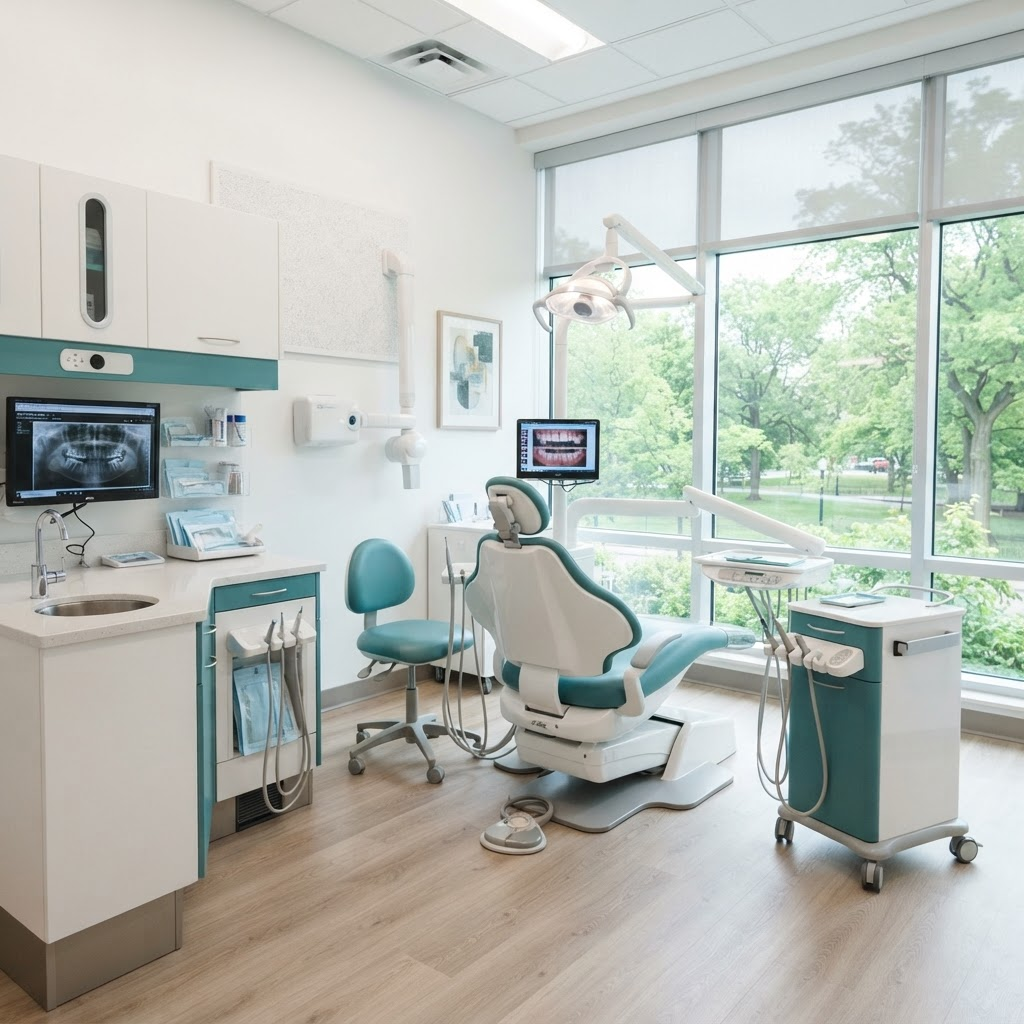
Dental Care and Implants in Antalya: Clinic Licensing (TDB), Timelines, and Transparent Pricing
How to verify Ministry of Health licensing, understand TDB reference pricing, separate titanium fixture costs from crowns, and avoid rushed two-stage implant mistakes.

Key takeaways
- Verify that the clinic holds a Ministry of Health license and, for dental tourism packages, the official Health Tourism Authorization Certificate.
- The Turkish Dental Association (TDB) publishes official minimum fee guidelines that serve as a baseline transparency check.
- Ask for an itemized quote separating the titanium implant fixture, abutment, bone graft/sinus lift, temporary teeth, and final zirconia/porcelain crown.
- Standard osseointegration requires 3 to 6 months between implant placement and permanent crown loading; be cautious of promises to complete complex multi-implant cases in one 5-day trip.
Antalya has grown into one of the Mediterranean’s busiest dental hubs. Along Lara’s main avenues, central Muratpaşa, Konyaaltı, and Alanya, practices range from solo neighborhood dentists to large multi-chair Oral and Dental Health Centers (ADSM) equipped with in-house CAD/CAM milling labs and 3D CBCT tomography. Knowing how Turkish dental regulation and treatment timelines actually work protects you from rushed decisions.
Verifying Licensing & Specialist Credentials
Every legitimate practice holds a provincial license from the Ministry of Health (İl Sağlık Müdürlüğü), while centers marketing to international patients must also hold a valid Uluslararası Sağlık Turizmi Yetki Belgesi (Health Tourism Authorization Certificate). Before sitting in the chair:
- Ask for the treating dentist’s full name and specialty—specifically whether surgical placements are handled by an Oral & Maxillofacial Surgeon (Çene Cerrahisi Uzmanı) or Periodontist rather than a general practitioner.
- Check whether 3D CBCT imaging and digital intraoral scanning are performed in-house.
- Use the Turkish Dental Association (Türk Dişhekimleri Birliği — TDB) published minimum fee schedule as a benchmark for diagnostics, fillings, and extractions.
Realistic Treatment Timelines
Biological bone healing around a dental implant cannot be compressed to fit a 4-day beach break. Plan travel dates according to the clinical protocol:
| Procedure | Realistic Stay Required | Key Clinical Notes |
|---|---|---|
| Hygiene, composite fillings, root canal therapy | 1–3 days | Multi-root retreatments under microscope often need two visits |
| Zirconia or E-max crowns (on healthy teeth or existing implants) | 5–7 working days | Covers preparation, digital scan, framework try-in, and final bite adjustment |
| Two-stage dental implants | Visit 1: 3–5 days; Visit 2 (3–6 months later): 6–8 days | Cases involving sinus lifts or bone grafting require full healing before permanent crown loading |
Reading an Itemized Quote & Demanding an Implant Passport
A headline advertisement quoting a low "per-implant" fee frequently reflects only the titanium screw. Confirm in writing whether the estimate includes the abutment, healing cap, temporary tooth for visible gaps, any sinus lift or bone graft materials, and the final zirconia or porcelain crown. Immediately after implant surgery, request your İmplant Pasaportu carrying the physical manufacturer stickers (brand, diameter, length, and lot number). Any dentist back home will need those exact specifications for future maintenance.
Compare verified practices across Lara, Konyaaltı, Muratpaşa, and Alanya in our directory of Antalya dentists & dental clinics, and find pre-op bloodwork facilities under medical labs.
FAQ
Frequently asked questions
Specific answers covering this topic.
Will the clinic provide invoices and medical reports for home insurance reimbursement?
Yes, licensed practices issue itemized official invoices (Fatura) and treatment summaries in English; always confirm reimbursement eligibility with your insurer before traveling.
What does a clinic warranty on crowns and implants usually cover?
Manufacturers generally cover the titanium fixture against material fracture, whereas clinic workmanship warranties (typically 3–5 years on prosthetics) usually require annual hygiene checkups and exclude trauma or neglect.